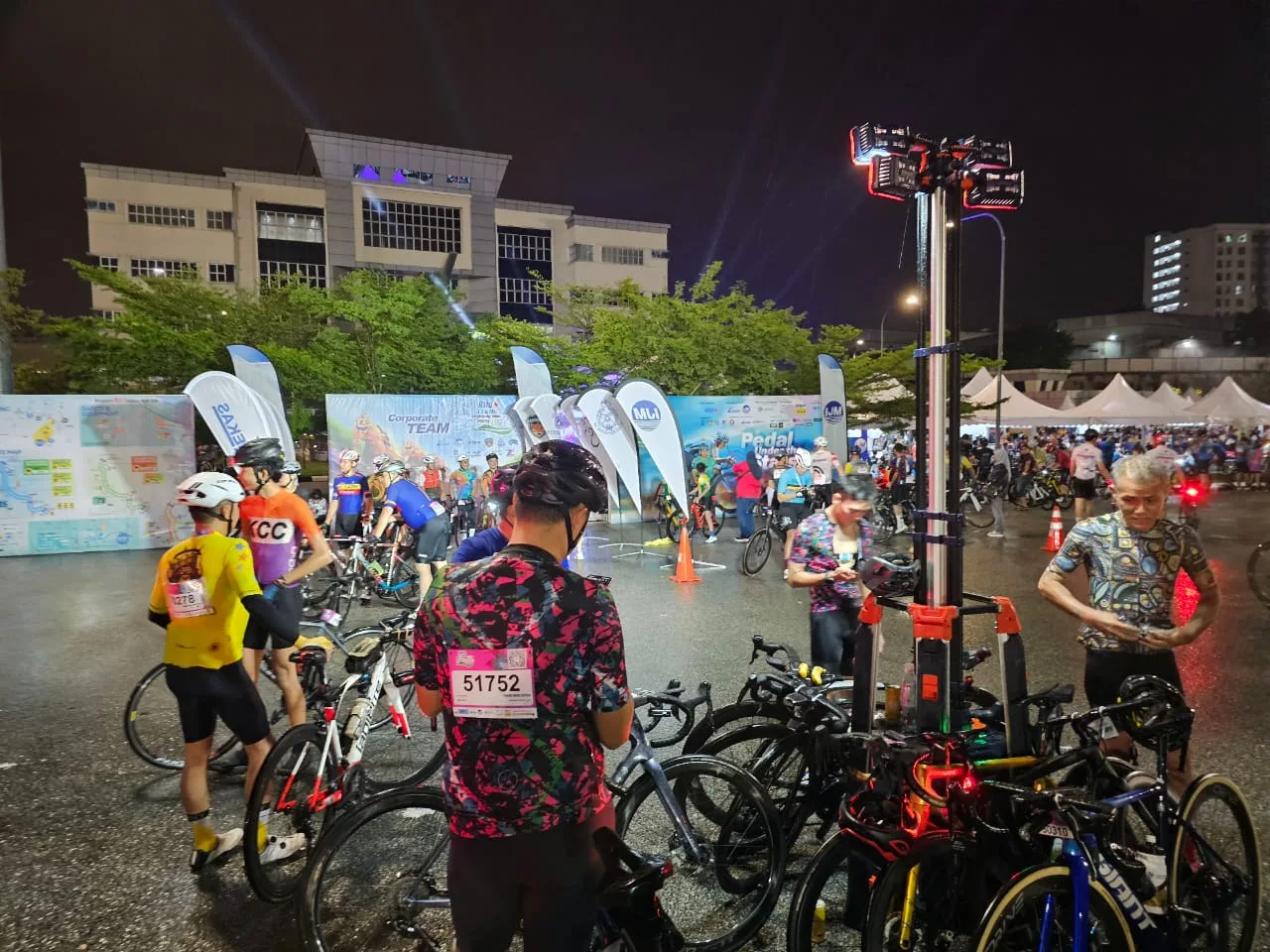
Prioritise crowd and decision zones
Start/finish, registration, bag drop, hydration, medical, turns, U-turns, road crossings, and dark parking edges usually matter more than evenly spacing lights along an entire route.
Plan quieter, cleaner temporary lighting for runners, volunteers, medical teams, parking areas, and route operation zones without placing diesel fumes near the crowd.
Use real route photos to discuss practical placement: event village, rider or runner gathering areas, U-turns, direction signs, cones, and marshal points.
For race organisers, the lighting question is usually not whether every metre of route needs a tower light. The practical question is where visibility changes the operation: crowd compression, route decisions, marshal control, medical response, vehicle movement, and post-event teardown.
Start/finish, registration, bag drop, hydration, medical, turns, U-turns, road crossings, and dark parking edges usually matter more than evenly spacing lights along an entire route.
Aim light onto the working area without shining directly into runners, drivers, marshals, houses, or camera positions. Battery units are useful when the tower must sit close to people.
Keep lighting equipment clear of runner lanes, emergency access, pickup points, and marshal sightlines. Confirm delivery, retrieval, and post-race movement before the crowd arrives.
Race lighting often runs longer than the race itself because setup, marshal briefing, crowd dispersal, vendor closing, and cleanup happen before and after official flag-off time.
Professional race lighting is planned by zone. Start with the places where people gather, change direction, queue, receive medical support, or move through darker areas.
Light the arch, timing area, queue lanes, photo zone, and runner recovery space.
Support check-in counters, bib collection, volunteer tables, and lost-and-found areas.
Keep treatment areas, water stations, and first-aid access visible for runners and crews.
Highlight route changes, marshal positions, cones, barriers, and uneven road edges.
Improve visibility for arrival, pickup, sponsor vehicles, loading, and post-race departure.
Keep the operation team lit after the crowd leaves and before permanent lighting is restored.
Use these as conversation starters, not fixed engineering designs. Final quantity depends on route length, road width, existing street lights, weather, runtime, and authority requirements.
For a compact start/finish zone, registration area, one dark junction, and a small parking or teardown area.
For a larger event village with bag drop, medical tent, water station, sponsor booth, and multiple route turns.
Use battery near runners and public areas, then diesel for wider car parks, long access roads, or remote sections requiring longer runtime.
These examples help the organiser and supplier speak the same language before a site visit. The final layout still depends on actual route map, access, and authority requirements.
Use battery units where runners queue, gather, slow down, collect medals, receive first aid, or wait for transport. This is usually the most visible zone and the strongest place to show a clean, low-noise setup.
Use targeted lighting at route decisions rather than trying to floodlight the whole course. Clear route changes reduce confusion and help marshals, volunteers, and safety crews work faster.
After the race, the lighting need moves to parking, pickup, waste collection, dismantling, and loading. A mixed battery and diesel plan may be more practical for wide parking fields.
Battery lighting is strongest near people. Diesel remains practical for long, remote, or wide-area coverage.
The better the event information, the faster Kyusen can suggest battery, diesel, or mixed lighting.
These references support the planning mindset: route safety, crowd movement, marshal visibility, venue design, and temporary event risk control.
They are references for discussion only and do not replace Malaysian authority approval, event permits, engineer review, or the organiser's safety plan.Quick answers for race organisers comparing battery and diesel temporary lighting.
They can support selected route zones, but a full route may need existing street lights, route marshals, battery units, and sometimes diesel units for longer or wider areas.
The start and finish areas are crowded and photo-heavy. Battery lighting keeps the zone quieter and avoids diesel smell near runners, guests, and medical support.
It depends on route map, existing street lights, crowd area, road width, and runtime. Kyusen can start with a sample layout after receiving the event map and schedule.
Send the event date, route map, setup timing, and lighting zones. Kyusen will advise a practical battery or mixed tower light setup.