Choosing light towers for your site: battery, diesel or a combined setup
Kyusen handles tower-light rental and purchase enquiries from Puchong, Selangor. Start with the areas to light, location and dates, then compare battery, diesel or separate units for different zones. Confirm operating hours and the proposed package before agreeing a hire or purchase.
Planning a project?
Share the job, location and dates. Add the hire period if renting.
You can enquire before choosing a model. Technical details can follow.
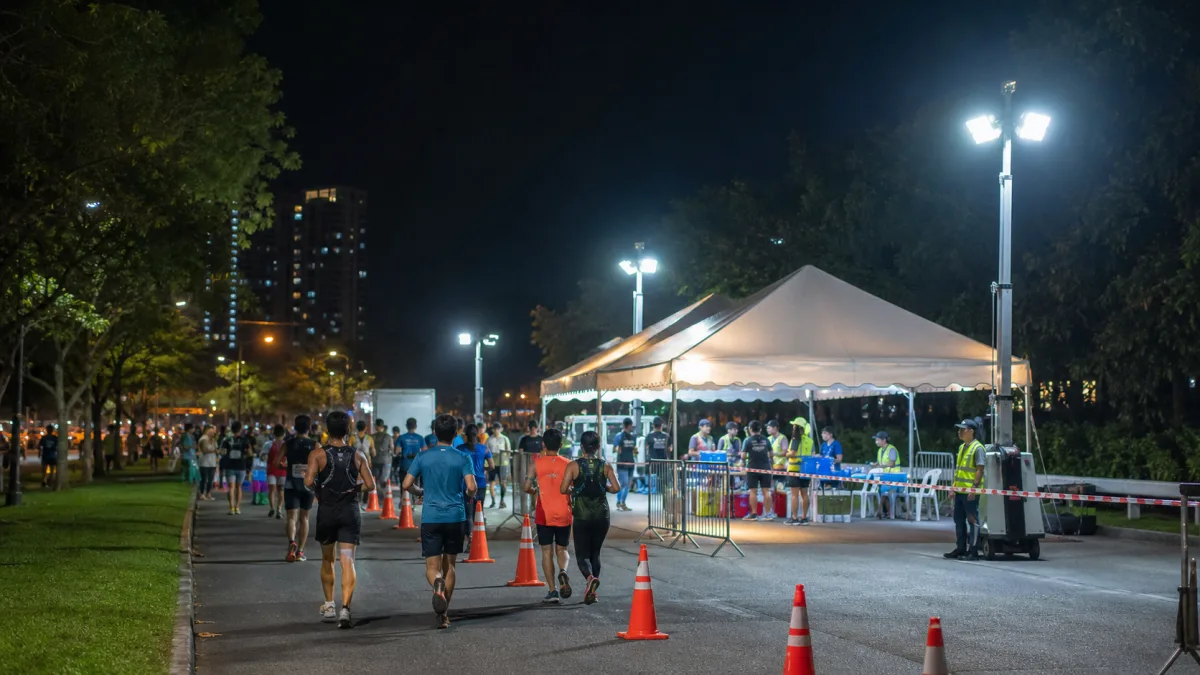
Start with the areas that need light
Mark the places where people will work, walk or gather. A repair point, access route and wider working area need separate consideration.
Use the short lighting enquiry with the job, location and timing; choose Not sure yet for unknown answers. Then follow the question you need to resolve:
- Power and placement: compare battery, diesel or separate units.
- A model has been suggested: read the ratings on the same basis.
- Running costs: compare charging and diesel fuel costs.
- Budget or purchase: use the rental and new-purchase routes.
HSE’s Lighting at work separates task illumination, glare and changes between adjacent areas. This is general UK guidance, not a Malaysian outdoor lighting specification. HSE, printed p. 7
Use the zone sketch to label approximate dimensions, obstacles and existing lights on your photo. Positions and quantities need assessment from the actual site.
Battery, diesel, or both?
Assess the power source for each zone. NIOSH identifies engine-exhaust carbon monoxide as a workplace hazard and recommends considering electric or battery alternatives where possible. Do not run engine-powered equipment in enclosed or partially enclosed spaces. Outdoor placement still needs an assessment of exhaust and nearby air intakes. NIOSH guidance
A diesel tower can be assessed for a separate open outdoor zone. The Yanmar LB430F-1 sheet identifies an L70 engine and four 400 W Metal Halide lamps; it does not establish suitability for every position. Yanmar, p. 1
A combined setup means separate battery and diesel units serving different areas, not one hybrid machine.
Battery models can also be combined. Ask what extra height, output or battery capacity changes for each task, then compare the proposed packages.
Read the ratings on the same basis
Height, lumens and weight describe different properties. Check the exact variant and measurement basis in these supplied-catalogue examples.
| Model | Catalogue details to check |
|---|---|
| KMC500 | 4.2 m / 5.3 m variants; 50 kg / 52 kg fitting-only weight. Listed maximum battery output: 33,000 / 35,000 lm. AC output is a separate rating. Catalogue, p. 13 |
| HRZ-322 | 2.2 m extended height; 10.4 kg fitting-only weight. Turbo battery output: 10,000 lm. The 17,000 lm maximum is AC output. Catalogue, p. 7 |
| Yanmar LB430F-1 rental details | Four 400 W Metal Halide lamps; L70 engine; listed weight 296 kg; 15-litre tank. The sheet gives neither measured coverage nor runtime per tank. Sheet, p. 1 |
KMC500 has a higher listed lighting position; HRZ-322 has a lower fitting-only weight. Ask whether the task needs that height and how the equipment will get there. Neither establishes an illuminated area. Batteries add weight. KMC500, p. 13, HRZ-322, p. 7
Separate daily hours from the hire period
Give hire dates and operating hours per day separately. A week’s rental does not specify nightly use. For purchase, describe the usual and longest expected shifts.
The KMC500 catalogue’s over-20-hour rating specifies Standard mode with three D24-500 packs. Do not read it as maximum brightness for that period. KMC500, p. 13
The HRZ-322 brochure states over 10 hours at high output; confirm the packs and setting for the quoted unit. It is not an overnight guarantee for every package. HRZ-322, p. 7
Ask for the brightness setting, included packs and charging or spare-pack plan alongside proposed operating hours.
Compare charging and diesel costs
Use the battery vs diesel tower light calculator to compare runtime, charging costs and diesel fuel costs for the same nightly hours. Enter the selected package’s battery capacity, actual lighting draw, electricity tariff and diesel consumption. The initial figures are generic examples; rental, purchase and other ownership costs need separate quotations.
Check the route into the site
Show the loading point and route to each position, including steps, narrow entrances, soft ground and vehicle restrictions. Confirm unloading and movement before booking.
The KMC500 catalogue distinguishes one-person positioning from lifting: its note calls for two or more people to lift it unless a forklift is available. “Portable” should not be read as “one person can lift it.” KMC500, p. 12
Use the exact unit’s manual and site assessment for setup. These catalogues do not establish wind limits, ground requirements or a complete operating procedure.
Choose the rental or purchase route
For rental, use the tower-light rental range and price guides. Estimates depend on the model, condition, battery/charger package and availability; delivery and collection are separate. Agree the period and transport scope.
For new purchase, compare the new tower-light range, including KMC500 and HRZ-322. Confirm the supplied variant, battery/charger package, quantity and lead time. Yanmar remains a rental/secondhand enquiry; discuss its actual condition and availability through the secondhand enquiry page. Hire estimates are not purchase prices.
What to send with your enquiry
Send these details when available:
- Rental or purchase: include the hire period if renting.
- Location and dates: say when the lighting is required.
- Zones and approximate sizes: a marked photo or sketch is welcome; mention the work in each zone.
- Hours per day: separate this from the rental duration.
- Access and restrictions: mention loading access, available power and any restrictions on engine use.
Use the lighting enquiry form if the model is undecided, or the model’s rental/new-purchase page when it is known. Ask what each proposed package changes for the task.
Discuss the lighting before choosing a model
Start with the job, location and dates. Add a marked photo/sketch, daily hours, hire period and charging/fuel/access arrangements if known. State rental or new purchase so Kyusen can discuss the model and package for each zone.
Sources & conditions
References describe their stated configurations and conditions. Confirm the exact unit, accessories and service scope in your quotation.
- HSE: Lighting at work (HSG38) Second edition, 1997; printed page 7.
General guidance on task lighting, glare and differences between adjacent areas. This is a UK publication, not a statement of Malaysian outdoor lighting requirements.
- CDC/NIOSH: Carbon Monoxide Hazards at Work 30 September 2024; prevention recommendations.
Supports the engine-exhaust warning and consideration of non-combustion alternatives. It does not establish model-specific operating distances or Malaysian compliance.
- KMC-500 supplier catalogue Pages 12-13; handling note and parameter tables. Private catalogue; not available as a public download.
Supplied catalogue; publication date not shown. Weights are fitting-only. The quoted runtime uses Standard mode and three D24-500 packs; it is not a maximum-output runtime.
- HRZ-322 supplier catalogue Page 7; battery modes and specification table. Private catalogue; not available as a public download.
Supplied catalogue; publication date not shown. The 17,000 lm figure is AC output, not battery output. Confirm the installed packs and setting behind any quoted runtime.
- Yanmar LB430F-1 specification sheet Page 1; product specification table.
Supplied sheet; publication date not shown. It lists lamp power, engine, weight and tank capacity, but does not give measured coverage or operating hours per tank.