2 ton roller compactor rental: choosing between 1, 2 and 3 ton options
Start with the material, work area and any specified roller requirement. Compare the actual 1, 2 and 3 ton model references, then confirm operating weight, working width and access for the offered unit before booking.
Planning a project?
Share the job, location and dates. Add the hire period if renting.
You can enquire before choosing a model. Technical details can follow.
Start with the requirement you already have
If you have only been asked to find a “2 ton roller”, send that request with the material, work area, location and timing. Use the short roller enquiry and choose Not sure yet where details are unknown. Add any project specification and access photos in the WhatsApp discussion rather than guessing an operating weight.
- A 2-ton category has been requested: first check what the label means for the offered unit.
- You are choosing between sizes: use the model comparison. For a compact-machine request, the baby roller guide also distinguishes operator arrangements.
- A specification or access sketch is available: check the material and project requirements, then the whole delivery-to-work route.
Confirm what “2 ton” means for your unit
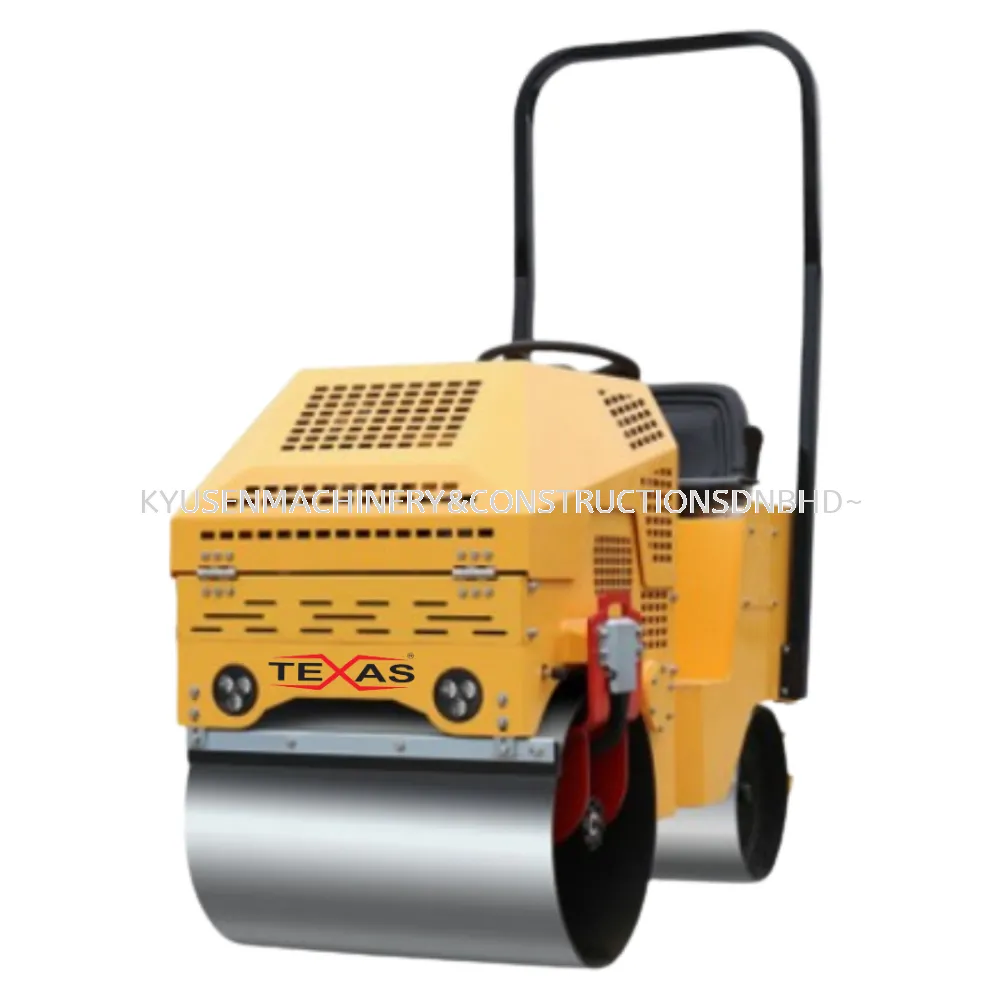
Kyusen’s 2-ton rental listing names the Texas FYL-880CC and gives a size of 1880 × 885 × 2140 mm. Its table does not state operating weight. Use the listing to identify the model, then ask for the actual unit’s specification sheet. 2-ton catalogue
An enquiry for a “2 ton roller” should therefore include a second question: what machine will be supplied, and what does its weight figure include? If the project requires a minimum operating weight, obtain confirmation on that basis before booking. A category label, engine size or vibration-force rating cannot answer that question.
Ask for the model plate, the relevant manual or specification sheet, and current photographs of the quoted machine. The catalogue photograph above identifies the listing being discussed; it does not establish the condition or availability of a particular rental unit.
Compare 1, 2 and 3 ton options on the same basis
These are examples from Kyusen’s published listings. They are useful references for an enquiry, rather than a ranking of which roller is best.
| Catalogue option | Published reference and quotation check |
|---|---|
| 1 ton | LP6500 rental details: listed weight 0.7 t, roller width 0.65 m. Reference Confirm: actual operating weight, overall machine width and offered configuration. |
| 2 ton | FYL-880CC rental details: ride-on model; operating weight is not stated. Reference Confirm: specification sheet, weight basis and actual working/transport dimensions. |
| 3 ton | Sakai SW350 rental details: listed gross weight 2,750 kg; dimensions 2625 × 1290 × 1570 mm. Reference Confirm: whether the quoted weight and height cover the supplied configuration. |
Roller width, overall machine width and transport height describe different constraints. Do not compare a drum width from one listing with the overall width of another. Likewise, a gross-weight figure and an operating-weight requirement need clarification before they can be compared fairly.
Start with the available roller options and ask for a like-for-like comparison of the actual units. A larger category name alone is not evidence that the machine will meet the project’s compaction requirement.
Match the machine to the material and specification
For unbound soil and aggregate work, FHWA’s technical guidance links equipment selection and effective layer thickness to the material, moisture, compaction effort and required result. It also describes field checks against the specification. These are general engineering principles, not a prescribed method for a Malaysian job. FHWA, sections 8.3 and 8.4.4
Turn that into a useful brief for your site team:
- Road base or crusher run: identify the supplied material, proposed layer thickness and the required acceptance test.
- Trench reinstatement: show the trench dimensions, restricted edges, services and the route into the working area.
- Asphalt work: send the mix and layer requirements and the site team’s proposed rolling method.
- Access roads or temporary yards: describe the intended use, work area and any weak or wet areas that need assessment.
The responsible site team should confirm the roller type and method against the project’s specification and the machine manual. Ask whether the proposed 2-ton option is acceptable, rather than assuming every compact ride-on roller can perform the same work. This guide does not prescribe a pass count, layer thickness or daily output.
For an asphalt proposal involving the SW350, use the 3-ton asphalt planning guide to prepare the intended rolling role, paving schedule and joint details.
Check the whole route, not just the entrance
Measure the narrowest clear opening and show the route from the unloading point to the work. Include turns, overhead restrictions, steps, slopes and places where the machine has to reverse. Ask the supplier to confirm the dimension order and the machine’s configuration for both transport and work.
For example, a gate measurement alone does not show whether the unit can turn through the passage beyond it. Send a sketch with the gate and passage dimensions, plus photographs from both directions. This is an illustrative access check, not a completed site assessment.
Confirm how the unit will be unloaded, who will operate it and whether the delivery vehicle can reach the agreed point. Describe nearby structures and buried services so the site team can assess the proposed operation and any restrictions. Obtain operating limits from the exact unit’s manual; a catalogue dimension is not an operating procedure.
Ask for evidence that answers the buying question
Different evidence answers different questions. The model plate and specification sheet identify the machine. Dated photographs help establish its present condition. A written stock check addresses availability. The project’s inspection and test records address the completed work.
When comparing quotations, keep the confirmed model and configuration attached to each price. If a supplier proposes a substitute, review its specifications and site fit again. Do not assume a similar tonnage label makes it equivalent.
For charges, minimum hire terms, fuel responsibilities and collection arrangements, use the separate roller rental planning checklist. That lets you compare the full hire package after deciding what machine to request.
If you are buying, choose Purchase in the roller enquiry form and ask for the offered machine’s condition, inspection opportunity and written sale terms. These rental catalogue examples do not confirm current sale stock. Confirm suitability against the same project and access requirements, then compare the purchase offer separately from hire costs.
Send one complete 2 ton roller enquiry
Include the location, material, approximate working area, project requirements, access measurements and photographs, dates and expected working hours. Add delivery and operator requirements and identify any mandatory model or weight requirement.
Ask for written confirmation of the exact unit, operating weight, dimensions, current availability and itemised quotation. If you are unsure whether to choose 1, 2 or 3 tons, say so and provide the project information. That gives Kyusen and the site team a practical basis for checking the options together.
Check a 2 ton roller against your project
Share the material, work area, location and timing first. Add a specified model/weight requirement, access measurements/photos and delivery/operator needs if known. State rental or purchase; the actual unit and quotation scope still need confirmation.
Sources & conditions
References describe their stated configurations and conditions. Confirm the exact unit, accessories and service scope in your quotation.
- Kyusen: 2 TON Vibratory Roller Compactor For Rental Model description, specification table and catalogue photograph; checked 5 October 2026.
Published model reference and photo; the table does not state operating weight. Confirm the actual unit and configuration.
- Kyusen: 1 TON Roller Compactor For Rental LP6500 specification table; checked 5 October 2026.
The published weight and roller width apply to the listed model, not every one-ton option.
- Kyusen: 3 TON Road Roller Compactor For Rental SW350 specification table; checked 5 October 2026.
The weight is labelled gross weight. Confirm the weight basis and dimensions for the quoted configuration.
- FHWA: Geotechnical Aspects of Pavements Reference Manual, Chapter 8 Sections 8.3, 8.4.4 and 8.4.6; checked 5 October 2026.
General US technical guidance for unbound materials; not a Malaysian project specification or a manual for these rollers.