3 ton roller compactor rental: planning an asphalt job with the Sakai SW350
Start a 3 ton asphalt roller enquiry with the work location, approximate area and paving date. Then confirm the SW350 unit, its role in the approved paving plan, operator readiness, joint details and acceptance records.
Planning a project?
Share the job, location and dates. Add the hire period if renting.
You can enquire before choosing a model. Technical details can follow.
Start with the paving brief
You can open the discussion with the location, approximate work area, paving date and whether an operator is needed. Use the short roller enquiry, select 3 ton road roller if that is the requested category, and send the available drawing and project requirements on WhatsApp. Unknown mix or method details can follow from the responsible site team before a machine is agreed.
- An SW350 has been proposed: read the unit and specification checks, then the Sakai SW350 rental details.
- The paving crew needs a booking: clarify the roller’s intended role and readiness time alongside delivery and operator arrangements.
- The job has joints or restricted edges: use the job-sketch checklist and agree the site’s handover and acceptance records.
Identify the SW350 and resolve the specification differences
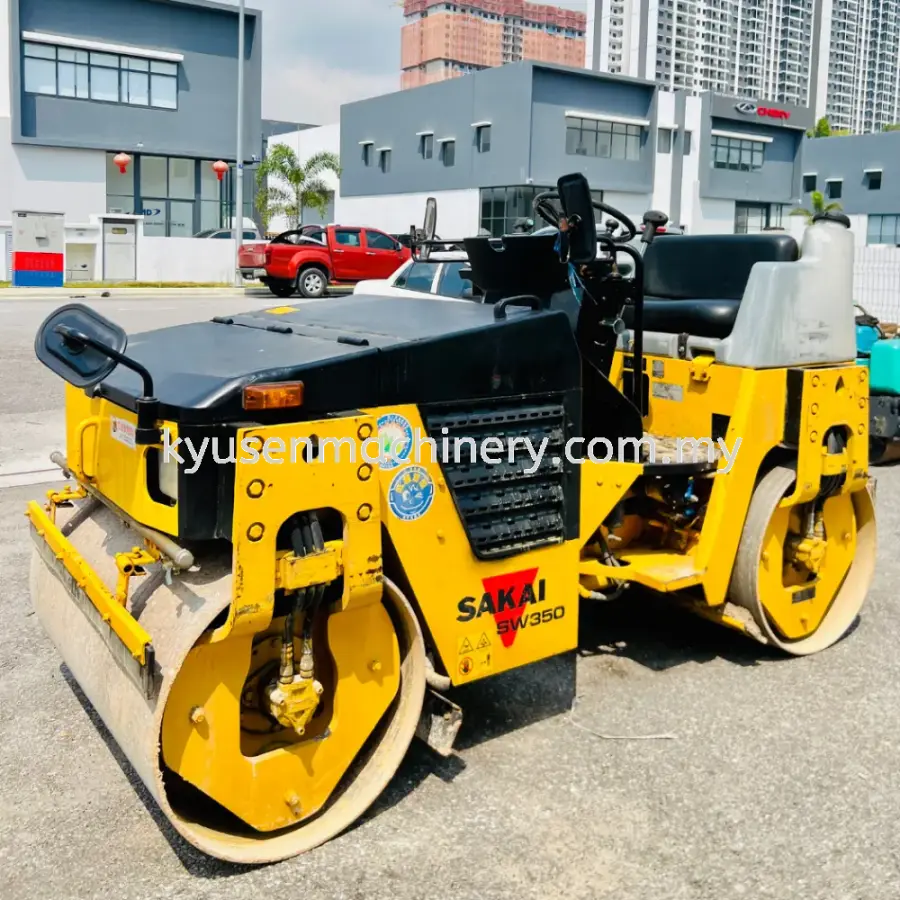
Kyusen’s 3-ton rental catalogue names the Sakai SW350 tandem roller. Sakai also publishes an archived SW350 specification under discontinued models. These identify a model to discuss, but the two tables do not give identical weight and height figures. Kyusen listing · Sakai archive
| Check | What the two sources say |
|---|---|
| Weight basis | Kyusen: gross weight 2,750 kg. Sakai: operating mass 2,780 kg. These are differently labelled figures; ask for the supplied unit’s operating-weight specification. |
| Overall height | Kyusen: 1,570 mm. Sakai: 1,620 mm. Confirm the actual protective structure and working/transport configuration before planning clearances. |
| Working width | Sakai distinguishes 1,200 mm compaction width from 1,290 mm overall width. Overall width is also 1,290 mm in Kyusen’s table; it is not the width compacted by one pass. |
The archive does not explain the discrepancy for Kyusen’s unit. Request its model plate, relevant manual and configuration details. Do not apply specifications for the SW350’s newer successors to this machine, or treat “3 ton” as a promise of an exact 3,000 kg operating weight.
Define the roller’s role before booking it
A quotation for asphalt reinstatement, a parking-area repair or an access-road overlay should describe the paving operation, not just name a roller. Provide the work dimensions, mix designation, specified compacted thickness, existing surface and the contractor’s equipment requirements.
Ask the responsible site team whether this SW350 can perform the assigned role within the approved method. The answer may involve other rollers or separate equipment for restricted areas. If the contract specifies a minimum machine weight or a particular roller combination, check that requirement first; the 3-ton rental category does not establish compliance.
Use the SW350 rental detail page to discuss the model and the roller enquiry form for the proposed dates and service requirements. If you are buying for repeated work, choose Purchase and ask for a separate offer covering the actual machine, condition, inspection and sale terms. A rental reference or archived manufacturer table does not confirm current sale stock.
Coordinate paving with the compaction window
Asphalt compactibility depends on the mix, temperature, layer thickness and supporting surface. The NAPA handbook explains that starting and stopping temperatures vary with the mix and project, and that weather affects cooling. Compaction factors
Before agreeing a delivery time, ask the paving contractor to confirm:
- The mix supplier’s temperature requirements and who records them on site.
- How the plant, haul trucks and paving crew will coordinate their start.
- When the roller and operator must be ready to follow the paving operation.
- What happens if placement is interrupted or the material is outside the approved conditions.
A roller arriving after the intended start is a scheduling problem that a longer hire period cannot resolve. Plan readiness around the placement sequence. Obtain the job’s temperature limits from the approved documents rather than copying a general temperature range into the booking.
Agree the rolling pattern and its verification
The handbook distinguishes breakdown rolling, intermediate rolling and finish rolling. The first two seek the required density; finishing principally removes marks and improves the surface appearance. A smooth-looking surface alone does not establish density. Rolling phases and test strips
For the planned SW350 role, ask who defines and verifies the rolling pattern, which operating mode is required, and whether the project requires a trial or test strip before production. The pattern needs to account for the paving width, roller width and joints. Changes in the work should be reviewed by the responsible team.
Do not order “six passes everywhere” or promise a daily area from the category name. Ask the contractor to demonstrate that the equipment and method achieve the specified result. The rental enquiry should identify the required role, not attempt to replace the machine manual or the contractor’s method statement.
Show the joints and restricted edges on the job sketch
Joint details deserve their own discussion. NAPA describes lower-density risks at unsupported edges and a problem called bridging: a steel drum can bear on existing cold pavement before the new material beside it is fully compacted. This is a joint-planning issue, not evidence that extra passes will fix every edge. Longitudinal joint guidance
Mark existing pavement, kerbs, drains, covers, narrow strips and planned stop/start joints on the drawing. Ask which portions the roller can reach, what joint preparation is specified and how any remaining areas will be compacted and checked. The team should select the treatment for the actual joint and geometry.
For an illustrative parking-area repair, show the patch dimensions and where it meets old asphalt on each side. Add the sequence of adjacent sections and identify who checks the joints. This example is a briefing aid, not a Kyusen project report or an approved rolling procedure.
Prepare the unit handover and acceptance records
Before the paving start, arrange a handover with the supplier and competent operator. Confirm the unit identification, operating instructions and the inspection of the drums, water-spray system, controls and protective equipment. Record any issue that needs resolving before use; a catalogue photo does not demonstrate these checks.
Separately, agree who records the mix deliveries, temperatures, rolling observations and required tests. Tie inspection results to the work location and the project’s acceptance criteria. Photographs can document the operation, but they do not substitute for the specified testing or establish a density result.
Send Kyusen the job brief, intended roller role, paving date, readiness time and operator requirements for a stock check and quotation. For a hire proposal, use the rental cost and transport checklist; for size alternatives, use the 1, 2 and 3 ton model comparison. Agree the equipment and service scope separately from the site’s compaction method and acceptance criteria.
Discuss a 3 ton roller for your asphalt work
Share the location, work area, paving date and operator needs first. Add the drawing, mix/layer details, approved roller requirements and readiness time if known. Kyusen checks the actual unit and quotation; your site team confirms the compaction method.
Sources & conditions
References describe their stated configurations and conditions. Confirm the exact unit, accessories and service scope in your quotation.
- Kyusen: 3 TON Road Roller Compactor For Rental SW350 description and specification table; checked 5 October 2026.
Rental catalogue reference. Weight is labelled gross; confirm the actual unit and configuration.
- Sakai: SW350/500 archived product specifications SW350 column in the Japanese manufacturer table, under discontinued models; checked 5 October 2026.
Operating mass, overall dimensions and compaction width are manufacturer references, not confirmation of Kyusen's rental unit.
- NAPA Asphalt Paving Handbook: 8.4 Factors Affecting Compaction Mixture temperature, environmental conditions, lift thickness and underlying conditions; checked 5 October 2026.
US technical guidance. The mix supplier and applicable project specification determine the job's temperature and layer requirements.
- NAPA Asphalt Paving Handbook: 8.6 Determination of Rolling Pattern Rolling phases, pattern variables and test-strip purpose; checked 5 October 2026.
Explains general paving principles; does not approve a SW350, prescribe a pass count or establish a Malaysian acceptance requirement.
- NAPA Asphalt Paving Handbook: 9.3 Longitudinal Joints Joint planning, unsupported edges and bridging at the cold mat; checked 5 October 2026.
General joint-construction guidance; the responsible site team specifies the joint treatment and rolling method for the work.